Thousands of parcels move through Philippine warehouses and courier hubs every day, and a good number of them arrive damaged for one simple reason: the label was not clear enough for a handler to catch in a few seconds. Getting fragile and hazardous labeling right is one of the cheapest ways to protect your goods, your customers, and your reputation.
Why Labeling Matters in Philippine Logistics
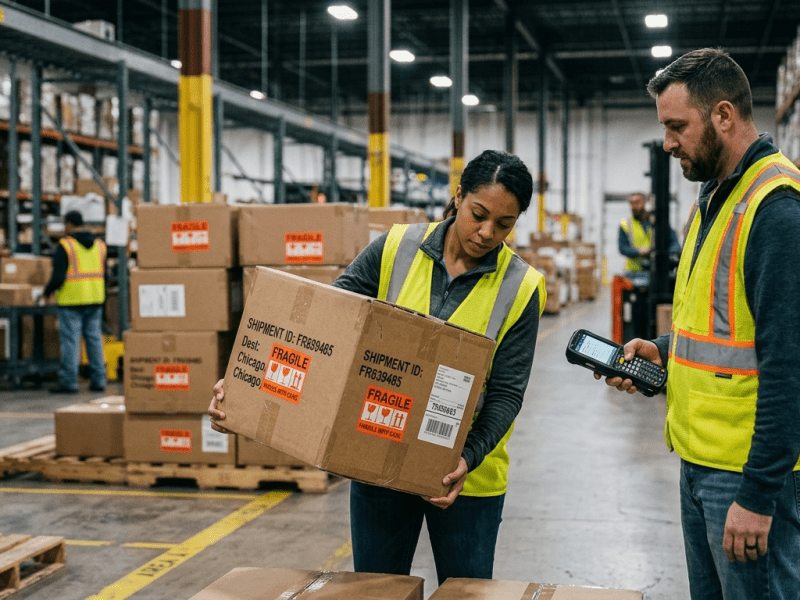
Local carriers rely heavily on manual sorting, especially for deliveries outside Metro Manila. A label that is too small, printed in faded ink, or stuck on the wrong side of the box gets missed during a quick sort. Standardized, easy-to-read labels reduce mishandling claims and help boxes move faster because handlers do not have to guess how a shipment should be treated.
Common Handling Symbols to Use
Stick to symbols couriers already recognize instead of custom graphics they have never seen. These five cover most fragile and hazardous shipments in the Philippine market:
| Symbol | Meaning | When to Use It |
| Broken glass | Contents are fragile | Glassware, electronics, ceramics |
| Flame | Flammable material inside | Alcohol-based liquids, aerosols, solvents |
| Umbrella with rain | Keep away from moisture | Paper goods, electronics, powders |
| Arrows pointing up | This side up | Liquids, stacked or top-heavy boxes |
| Stacked boxes with X | Do not stack | Lightweight fragile packaging |
Step-by-Step: Labeling Fragile Shipments
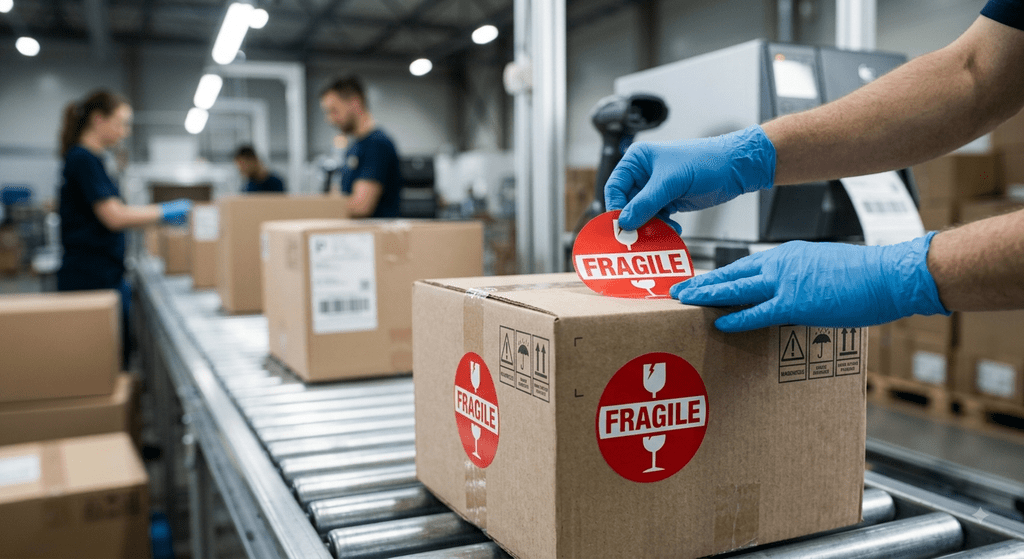
- Size the label to the box. A minimum of 4 x 4 inches keeps the symbol visible from arm’s length on a sorting belt.
- Apply the label on at least two sides, ideally the top and one long side, so it stays visible however the box is placed.
- Use high-contrast colors like red on white or black on white so the label reads clearly under warehouse lighting.
- Pair the icon with text such as “FRAGILE – HANDLE WITH CARE” since not every handler stops to interpret a symbol alone.
- Add directional arrows for liquids or top-heavy items so the box is never carried or stacked upside down.
For shipments that go out in batches, pre-printed fragile and flammable label stickers keep the placement, size, and adhesive consistent across every box instead of relying on hand-cut labels that vary.
Step-by-Step: Labeling Flammable and Hazardous Shipments
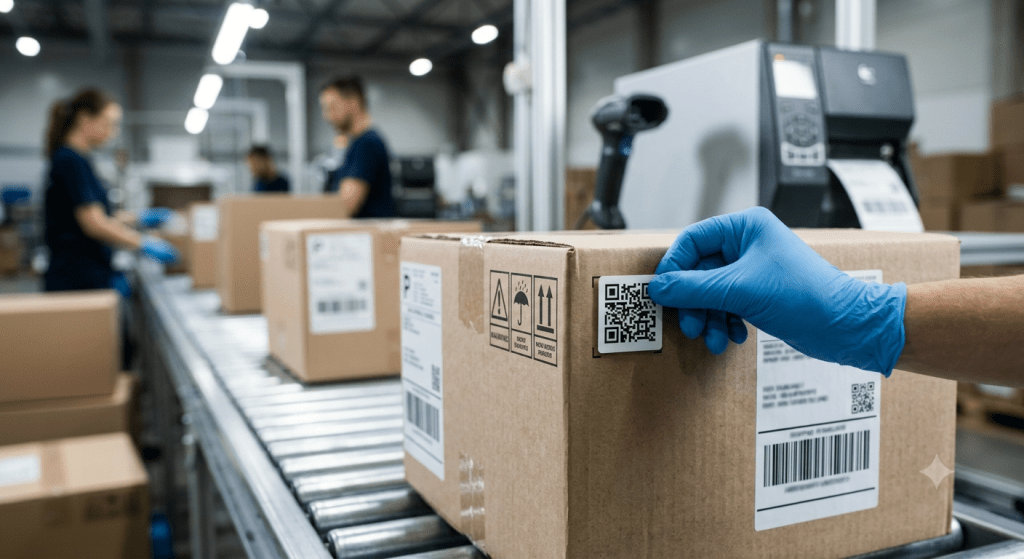
- Confirm the carrier’s hazmat acceptance policy before booking, since not every courier accepts flammable or chemical goods.
- Use the standard flame symbol for domestic parcels, or a UN/DOT diamond hazard label if the shipment crosses borders.
- Label all four sides of hazardous shipments, not just two, since these boxes are handled more cautiously and viewed from more angles.
- Add a batch or lot number label for traceability, which matters most for chemical, cosmetic, or regulated shipments.
When tamper detection also matters, for example with regulated or high-value goods, pairing hazard labels with tamper-evident void sticker labels shows immediately if a box was opened in transit.
Making Labels Courier-Friendly
A label that looks correct on your packing table can still fail once it reaches a courier’s sorting line. Keep the adhesive strong enough to survive humidity and handling, avoid placing labels over box seams or tape lines where they can peel, and never cover the airway bill or barcode with a hazard or fragile sticker. The goal is a label a handler can read and act on in under two seconds.
Choosing the Right Label Material
Material choice affects how long a label survives the trip. Paper labels work for short, dry domestic routes, while PP synthetic and polyester labels resist the humidity and occasional rain exposure common across Philippine logistics chains. For brands that want their logo alongside hazard or fragile icons in one print run, custom label stickers combine branding and compliance in a single design.
| Material | Moisture Resistance | Durability | Best For |
| Paper | Low | Low | Short, dry, domestic routes |
| PP Synthetic | High | High | Humid climates, standard PH shipping |
| Polyester | Very High | Very High | Long routes, outdoor storage, repeated handling |
Get Labels That Hold Up in Transit
Correct labeling is a small step that prevents expensive damage claims and delivery delays. If your team needs fragile, flammable, or custom labels sized and printed for your shipping volume, All Labels Philippines can help. Talk to All Labels Philippines about your labeling needs.
Recent Comments