
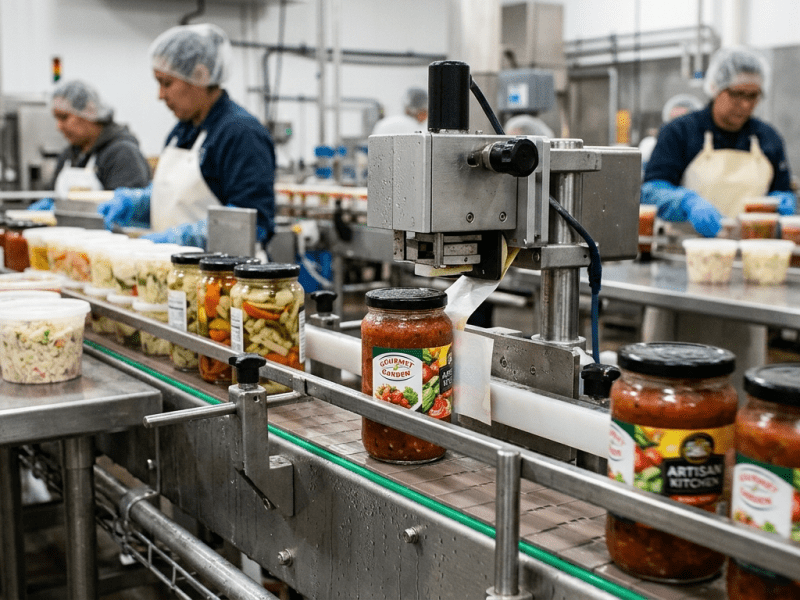
If your product labels turn soggy, curl, or fall off inside the chiller, you are not dealing with a printing problem, you are dealing with a material problem. For food and beverage brands across the Philippines, choosing the right waterproof food labels is what separates packaging that survives cold storage, condensation, and wet handling from labels that end up as a soggy mess on the warehouse floor.
This guide compares the three label materials food brands rely on most, paper, PP (polypropylene), and polyester, and shows where direct thermal printing fits into the picture. Whether you are labeling chilled dairy, frozen seafood, bottled beverages, or sauces headed straight into the ref, this comparison will help you pick a label that won’t peel, blur, or fail before the product reaches the shelf.
Why Label Material Matters for Cold and Wet Food Packaging
Refrigerated and frozen food packaging goes through conditions that regular paper labels were never designed for: condensation on chilled bottles, direct contact with ice, moisture from washdowns, and repeated temperature swings between the freezer and the counter. A label that isn’t built for this environment will absorb moisture, lose adhesion, or smear its barcode, which creates real problems at checkout and during inventory scans.
Beyond durability, food labels sold in the Philippines also need to stay legible enough to meet FDA labeling requirements for ingredients, nutritional facts, and expiry dates throughout the product’s cold-chain life, not just on the day it leaves the factory. That makes material selection a food-safety and compliance decision, not just a cosmetic one.
Paper vs PP vs Polyester Labels: Side-by-Side Comparison
Here is a simple breakdown of how the three most common label face materials perform in refrigerated, frozen, and wet-handling conditions.
| Label Material | Water Resistance | Cold-Chain Durability | Tear Resistance | Best For | Cost Tier |
|---|---|---|---|---|---|
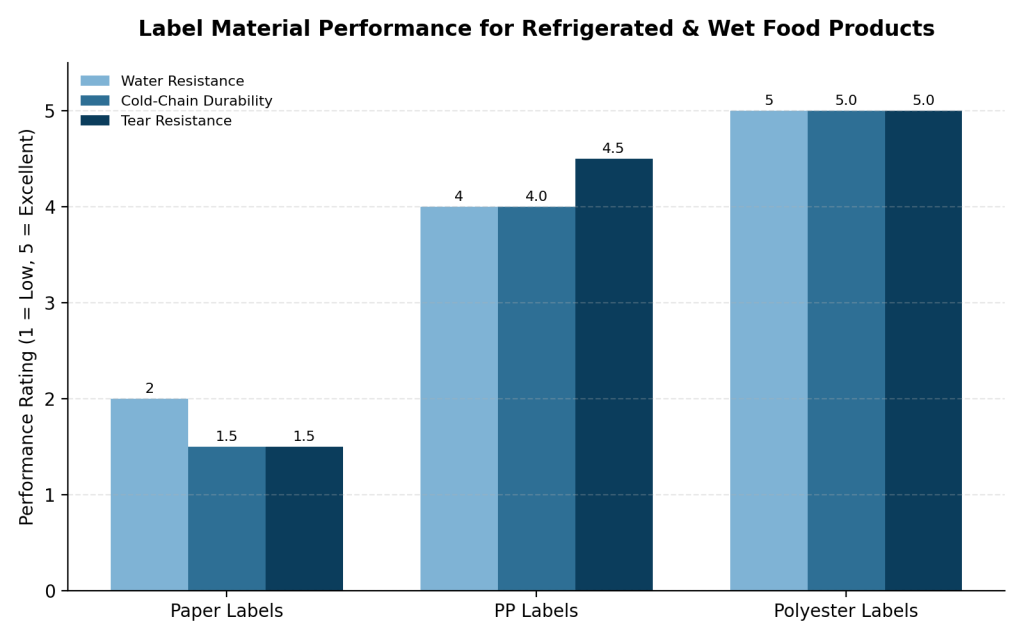
| Paper Labels | Low — softens, wrinkles, or peels when wet | Poor below 4°C or in freezers | Low, tears easily | Dry, ambient-temperature products | ₱ (lowest) |
| PP (Polypropylene) Labels | High — resists condensation and splashes | Good in chillers and short frozen storage | High, flexible film | Chilled dairy, beverages, sauces, fresh produce | ₱₱ (mid-range) |
| Polyester Labels | Excellent — fully waterproof, chemical-resistant | Excellent, holds up in deep-freeze and long storage | Excellent, puncture and abrasion-resistant | Frozen goods, seafood, long shelf-life cold storage | ₱₱₱ (highest) |
At a glance, the chart below shows how each material scores on water resistance, cold-chain durability, and tear resistance.
PP Labels: Reliable Everyday Protection for Chilled Products
PP Labels are the go-to choice for most chilled food and beverage products because they hit the sweet spot between water resistance and cost. Made from tear-resistant polypropylene film, PP labels shrug off condensation, oil, and light chemical exposure, which makes them well suited for dairy tubs, bottled drinks, sauces, and fresh produce that sit in a chiller for days or weeks at a time.
ALP offers PP labels in two finishes: PP White Labels for high-contrast printing and barcode clarity, and PP Clear Labels for a seamless “no-label” look that lets your packaging design show through, a popular option for premium beverages and cosmetics-adjacent food products.
Polyester Labels: Maximum Durability for Frozen & Extreme-Condition Storage
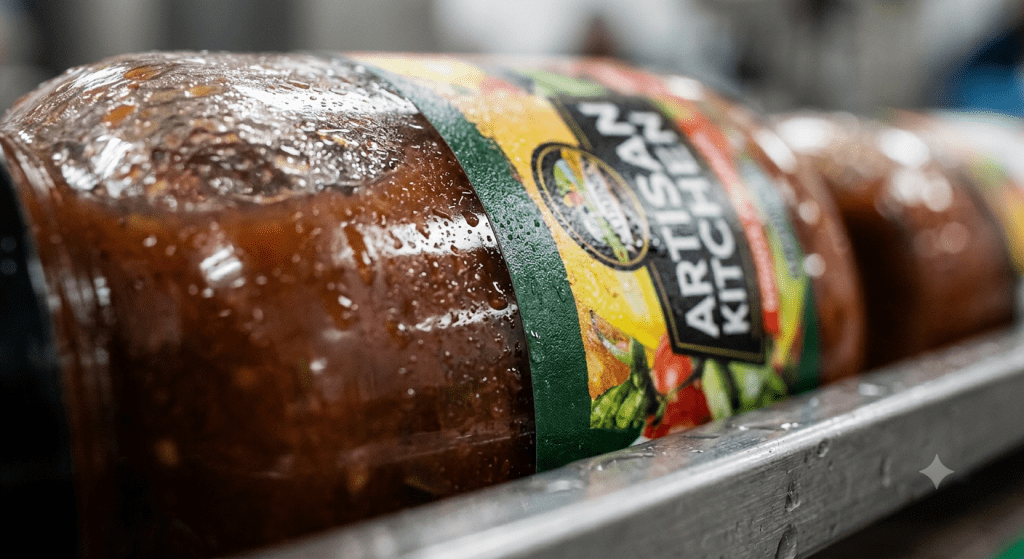
When products move into deep-freeze storage, long-haul cold logistics, or repeated washdown environments, Polyester Labels outperform both paper and PP. Polyester film resists moisture, chemicals, and abrasion at a level that makes it the standard choice for frozen seafood, meat processing, and any label that needs to survive months of freezer storage without lifting at the corners or losing print clarity.
For products that also need a premium, tamper-evident, or asset-tracking look, Chrome Polyester Labels add a reflective metallic finish while keeping the same resistance to water, chemicals, and extreme temperatures.
Direct Thermal Labels: Fast, Ribbon-Free Printing for Wet Environments
Material is only half the equation, print technology matters too. Direct Thermal Labels use heat-sensitive coating instead of ribbon and ink, which means fewer consumables and faster reprints for products with frequent batch, weight, or date changes, such as fresh-cut produce, bakery items, or meal-prep packs. Because ALP’s direct thermal stock can be produced on PP or synthetic film, you get ribbon-free convenience without giving up water resistance, a useful combination for wet-handling stations like seafood counters and cold-cut delis.
Which Material Should You Choose? Quick Decision Guide
- Chilled dairy, beverages, sauces, or fresh produce: PP Labels for reliable, cost-effective water resistance.
- Frozen seafood, meat, or long-term cold storage: Polyester Labels for maximum durability against ice, moisture, and abrasion.
- Fresh-cut, bakery, or meal-prep items needing frequent reprints: Direct Thermal Labels on PP or synthetic stock for speed plus moisture resistance.
- Dry, ambient-temperature packaging only: Paper labels remain the most budget-friendly option.
Frequently Asked Questions
What is the best waterproof label material for refrigerated food in the Philippines?
PP (polypropylene) labels are the most reliable all-around choice for refrigerated food, offering strong water and condensation resistance at a mid-range cost. Polyester labels are the better option for freezer storage or long-term wet exposure.
Do direct thermal labels work in cold storage?
Yes, as long as the label face stock is a water-resistant material like PP or polyester rather than plain paper. The direct thermal coating handles the printing side, while the face material handles moisture resistance.
How long do PP labels last in the fridge compared to paper labels?
Paper labels typically start softening, wrinkling, or peeling within days of exposure to condensation, while PP labels are designed to stay intact and legible for the full chilled shelf life of the product, often several weeks.
Get Waterproof Labels Built for Your Cold Chain
Choosing the right label material protects your product, your barcode scans, and your brand’s shelf presence. If you need labels that won’t peel, blur, or fail inside the chiller or freezer, explore ALP’s full range of food-grade label solutions and get a material recommendation suited to your exact storage conditions.
Recent Comments