
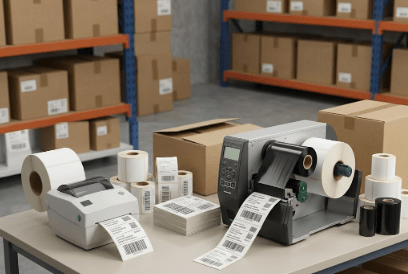
If you’re running a warehouse in the Philippines — whether it’s managing grocery stock in Pasay, distributing goods in Laguna, or handling express parcels out of Cebu — you’ve probably used both types of labels without knowing the difference. Getting this wrong costs money: labels that fade mid-shipment, barcodes that won’t scan after a week in the sun, or stickers that peel off in the cold chain.
This guide breaks it down practically, so you can pick the right label for every job on your floor.
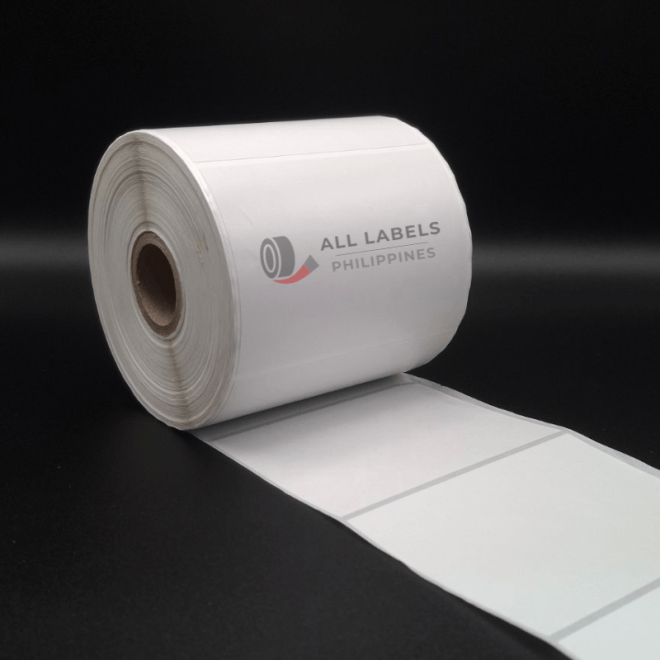
At a Glance: Comparison Table
Use this table to quickly find the right label type before we go into detail below.
| Feature | Direct Thermal | Thermal Transfer | Best For | ALP Product | Cost |
|---|---|---|---|---|---|
| Print Method | Heat on label | Heat on ribbon→label | Short-term use | Direct Thermal Labels | ₱ Low |
| Lifespan | 6–12 months | 3–5 years+ | Long-term assets | Thermal Transfer Labels | ₱₱ Med |
| Ribbon Needed? | No | Yes | Ribbon cost = quality | Thermal Ribbon | ₱₱ Med |
| Heat Resistance | Low | High | Cold storage / outdoor | Thermal Transfer Labels | ₱₱ Med |
| Scratch Resistance | Low | High | Heavy-duty handling | Thermal Transfer Labels | ₱₱ Med |
| Chemical Resistance | None | Good | Pharma / chemicals | Thermal Transfer Labels | ₱₱ Med |
| Typical Use | Shipping labels, receipts | Product/asset labels | — | Both | Varies |
How Each Type Works
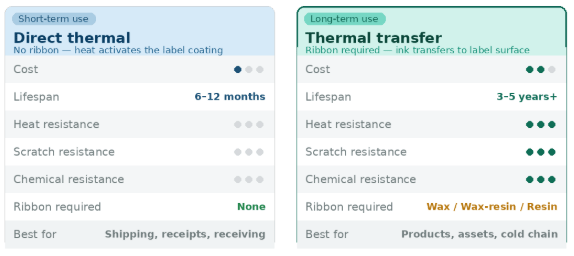
Direct thermal printing works by applying heat directly onto a chemically treated label. No ink, no ribbon — just heat and paper. That simplicity makes it fast and cheap per print. The trade-off: the label is sensitive to heat, UV light, and friction. Leave a direct thermal label on a box in a sun-exposed loading dock for a few months, and the print will start to fade.
Thermal transfer printing uses a ribbon coated with wax, resin, or a wax-resin blend. The printhead heats the ribbon, which transfers ink onto the label. The result is a much more durable print — resistant to scratches, chemicals, moisture, and heat. The downside is cost: you need to buy and replace ribbons, and printer maintenance is slightly higher.
Real Warehouse Scenarios
When Direct Thermal Makes Sense
Use Direct Thermal Labels when your labels don’t need to last long or won’t be exposed to harsh conditions:
- Outbound shipping labels that travel with a parcel for 3–5 days and get discarded on delivery
- Receiving labels you apply to incoming boxes and scan once before putting items away
- Short-run pick tickets or batch slips used on the warehouse floor within the same shift
- Receipts at your warehouse counter or loading bay
When Thermal Transfer Makes Sense
Use Thermal Transfer Labels — paired with the right Thermal Ribbon — when durability matters:
- Product labels that stay on items for months or years (e.g., electronics, appliances, automotive parts)
- Cold storage labels that survive temperature cycling and condensation
- Labels exposed to outdoor humidity, chemicals, or UV (e.g., hardware, fertilizer bags, industrial containers)
- Compliance or traceability labels that need to be readable for audit and regulatory purposes
- Fixed asset tags on warehouse equipment, forklifts, shelving, and pallet jacks
The Ribbon Factor
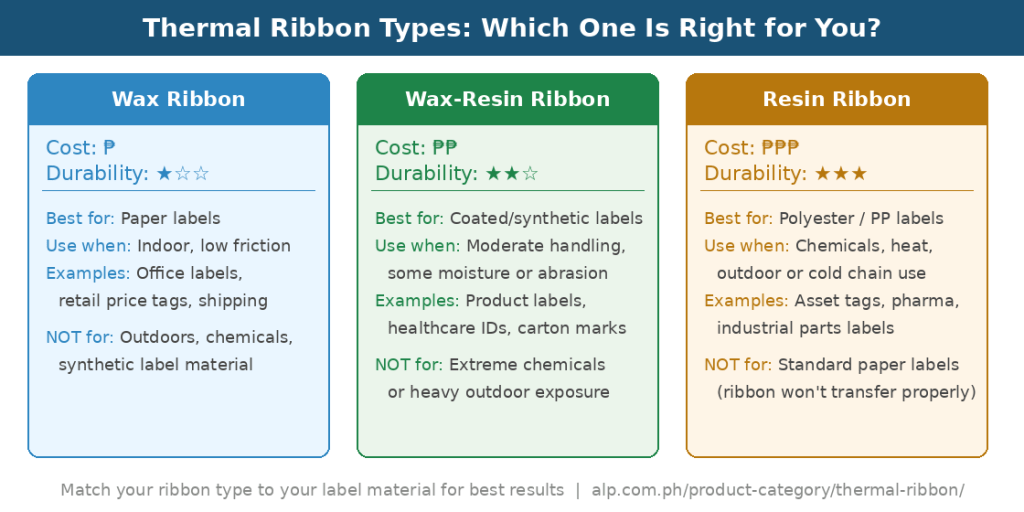
The Thermal Ribbon you choose directly affects print quality and durability:
- Wax ribbons — most affordable, good for paper labels, standard indoor use
- Wax-resin ribbons — better scratch and smear resistance, ideal for synthetic or coated labels
- Resin ribbons — highest durability, for polyester and polypropylene labels that face chemicals, extreme heat, or outdoor conditions
Matching the wrong ribbon to your label material is one of the most common (and avoidable) warehousing mistakes.
Quick Decision Guide
Ask yourself three questions:
- Will this label be on the item for more than 6 months? → Thermal Transfer
- Will it be exposed to heat, moisture, or chemicals? → Thermal Transfer
- Is it a temporary or one-trip label? → Direct Thermal is fine
Still not sure? A good rule of thumb: if the label moves out the door with the product, direct thermal works. If it stays on the asset or product permanently, go thermal transfer.
Get the Right Labels for Your Operation
ALP Philippines supplies both direct thermal and thermal transfer labels in custom sizes, materials, and roll counts — designed for Philippine warehouse conditions. Whether you need a small batch or a full-year supply, we can help you spec the right combination of label and ribbon. Browse our full label and ribbon catalogue at alp.com.ph — or contact our team for a custom quote.
Recent Comments